Views: 0 Author: Site Editor Publish Time: 2026-05-01 Origin: Site
Planning a formal wedding involves countless complex decisions. Parents and wedding planners face a unique challenge when outfitting younger attendants. They struggle to balance strict wedding dress codes against everyday realities. A child’s physical comfort matters immensely. Rapid growth complicates the sizing process. Budget constraints also play a massive role during wedding preparations.
We will thoroughly evaluate the structural differences between formal garments. We explore traditional etiquette rules alongside modern adaptations. We also analyze the practical return on investment. Should you choose a suit or a tuxedo? Young ring bearers, junior groomsmen, or guests need appropriate attire for the big day.
Our objective remains incredibly clear. We provide a definitive framework for you. This guide helps you make a confident, cost-effective purchasing or rental decision. You will learn how to align the outfit perfectly to the venue. You will also meet the child’s physical needs easily.
The Defining Feature: The only physical difference is satin; a boys tuxedo features satin lapels, buttons, and pant stripes, while a boys suit uses uniform woven fabric throughout.
The Etiquette Rule: Traditional sartorial rules suggest tuxedos are evening-wear (after 6 PM) and typically reserved for adults or youths over 12; putting toddlers in tuxedos is often viewed as "costume-like" by traditionalists.
The ROI Factor: Purchasing a high-quality boys suit offers a significantly better cost-per-wear ratio than renting a boys tuxedo, as suits can be reused for holidays, graduations, and other formal events.
The Comfort Mandate: Regardless of dress code, fit and flexibility (e.g., stretch fabrics, adjustable waistbands) are the ultimate deciding factors for children under 10.
Understanding formal menswear requires looking closely at fabric composition. The "satin rule" dictates the entire structural difference between these two garments. This specific feature directly determines the overall outcome of the outfit. It dictates how the garment behaves under different lighting conditions.
A true Boys Tuxedo relies heavily on satin accents. Manufacturers incorporate satin onto the lapels. They add it to the pocket trims. They cover the front buttons entirely in satin. You will also find a distinctive satin stripe running down the outer pant legs. This combination creates high visual contrast. It establishes maximum formality for the wearer. The reflective satin elements look spectacular in flash photography. They shine beautifully under evening ballroom lighting.
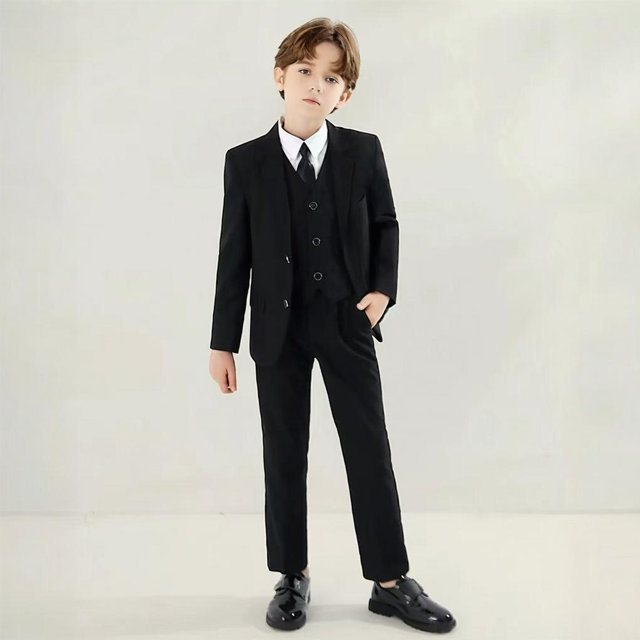
A standard Boys Suit operates on a completely different design philosophy. Tailors construct it from uniform woven fabric across all components. The jacket lapels, pockets, and trousers share the exact same material. You will typically find wool, cotton blends, or breathable linen. The suit derives its formal appearance entirely from tailoring precision. Fit and color drive the aesthetic outcome.
Accessories differentiate these garments further. Traditional evening wear demands specific styling elements. Tuxedos traditionally mandate a dark bow tie. You must also pair them alongside French cuffs and metallic cufflinks. You cannot easily bypass these rules.
Suits offer massive flexibility for parents. You can utilize standard neckties. You can opt for colorful bow ties. You can even skip the tie entirely for casual receptions. Standard barrel cuffs finish the suit sleeves perfectly. They require no extra jewelry.
Feature | Boys Tuxedo | Boys Suit |
|---|---|---|
Fabric Consistency | Mixed (Satin accents on woven base) | Uniform (Same fabric throughout) |
Lapels & Buttons | Satin-faced lapels, satin-covered buttons | Woven lapels, standard horn or plastic buttons |
Trousers | Satin stripe down the side seam | Plain seams matching the jacket |
Neckwear | Bow tie required strictly | Necktie, bow tie, or open collar |
Shirt Cuffs | French cuffs requiring cufflinks | Standard barrel cuffs with sewn buttons |
Sartorial conventions carry significant weight during wedding planning. Strict traditionalists view formal wear through a historical lens. They argue passionately about proper age thresholds. Traditional menswear authorities define the tuxedo strictly as a man's evening garment. They believe young children should avoid it.
For boys under twelve, a dark suit represents the historically accurate choice. It looks far more dignified. It respects the child's age appropriately. Putting toddlers in miniature evening wear creates a specific aesthetic. Traditionalists often view this look as "costume-like" or overly theatrical. They prefer age-appropriate dignity over forced uniformity.
Event timing heavily influences your decision. Wedding etiquette links formality directly to the clock. Daytime and afternoon ceremonies have clear boundaries.
Daytime/Afternoon Weddings: A well-tailored suit is definitively the correct choice. Wearing tuxedos before 5 PM violates traditional Black Tie etiquette entirely. The bright afternoon sun clashes harshly against formal satin elements.
Evening/Black Tie Weddings: Formal evening wear becomes acceptable here. A couple might mandate absolute uniformity across the entire wedding party. They want junior groomsmen matching the adult groomsmen perfectly.
However, modern realities often soften strict historical rules. A dark charcoal or navy suit remains a highly acceptable workaround for young children. You can respect the Black Tie dress code effortlessly. You simply outfit the child in a pristine, dark-colored suit. This compromise satisfies both etiquette experts and practical parents.
Best Practice: Always ask the bride and groom about their vision first. If they request absolute uniformity for a 7 PM ceremony, follow their lead. If they prioritize the child's comfort, default immediately to a dark suit.
We must address implementation realities when dressing young boys. The "toddler factor" plays a massive role in your decision. Kids will always be kids. Children will run around the venue. They will jump on the dance floor. They often sit directly on the floor during long speeches. You cannot expect them to behave like miniature adults.
Formal rentals handle toddler behavior poorly. Tuxedo rentals feel notoriously rigid. Manufacturers construct them using heavy, durable synthetics. They lack child-friendly mobility features. They also cost a small fortune to replace if damaged. Grass stains or torn knees will drain your budget quickly. Parents spend the entire reception worrying about rented garments.
Modern suiting options solve these headaches beautifully. Manufacturers design contemporary boys suits specifically for active bodies. They integrate hidden elastic waistbands. They feature reinforced knees. They utilize breathable stretch-blends. These elements ensure maximum comfort. Happy children create better photographs. Uncomfortable children cry during the ceremony.
Financial practicality strongly favors purchasing a suit. Renting formal attire drains resources surprisingly fast. You might pay $150 to $250 for a child's rental. You must return this garment the very next morning. It offers zero future utility.
Purchasing a high-quality suit represents a smart investment. The garment scales beautifully across various seasons. Your child can wear it to Easter services. You can use it for family photo sessions. School graduations provide another excellent opportunity. The cost-per-wear ratio drops significantly over time. A $100 purchased suit worn four times costs just $25 per event. You keep the garment permanently. You avoid rental return deadlines entirely.
Common Mistake: Assuming rentals save money for children. Due to rapid growth and high damage risks, buying an affordable, flexible suit always presents lower financial risk.
Color selection demands careful consideration. A plain black suit carries hidden liabilities. Parents often buy black suits hoping for maximum versatility. Unfortunately, a pure black suit creates confusion at formal events. It can inadvertently look like service staff attire. You do not want guests mistaking your child for a banquet server.
If you skip the formal evening wear, choose your colors wisely. Opt for Midnight Blue instead of black. Charcoal gray also provides a fantastic alternative. These colors offer a richer, deeper aesthetic. They look significantly more tailored. They photograph exceptionally well outdoors and indoors.
The white suit dilemma causes endless debate among wedding planners. White or ivory outfits remain highly popular for toddlers. Ring bearers look angelic in bright white. We must evaluate the pros and risks clearly.
Pros: White creates distinct visual separation. It separates young boys from the adult groomsmen effectively. It aligns beautifully with the bride's gown. It looks spectacular in summer garden settings.
Risks: White fabric acts like a stain magnet. Spills happen before the ceremony even begins. Grass stains ruin the trousers quickly. Muddy shoes create immediate visual disasters.
We recommend reserving white strictly for ages two to five. You often see these styled specifically as "Eton suits." Eton suits feature matching dress shorts instead of long trousers. Shorts minimize knee stains beautifully. They keep toddlers cool during summer ceremonies. A white Boys Suit styled this way looks historically accurate and charming.
Decision paralysis hits parents frequently. We developed a shortlisting logic to simplify your choice. Use this three-question matrix to find the perfect outfit.
What is the Dress Code and Venue? Evaluate the environment carefully. Black Tie events in grand ballrooms require dark colors. Choose formal evening wear or a dark navy suit. Garden, vineyard, or semi-formal events feel lighter. A well-tailored suit wins every time here.
What is the Child's Role? Wedding roles dictate specific expectations. Junior groomsmen carry heavier responsibilities. Match the adult groomsmen as closely as possible. Ring bearers and standard guests have more freedom. Prioritize the child's comfort above all else.
What is the Child's Age? Age determines appropriateness. Boys under five need highly practical options. Choose an Eton suit or a standard suit. Boys aged six to twelve need maturity without stiffness. A dark suit works perfectly. Teenagers over thirteen handle formality much better. Formal evening wear becomes entirely acceptable for them.
Child's Age & Role | Black Tie / Evening Event | Semi-Formal / Daytime Event |
|---|---|---|
Under 5 (Ring Bearer) | Dark Navy Suit / Eton Suit | Light Suit / White Eton Suit |
Age 6–12 (Junior Groomsman) | Dark Suit (Match Groomsmen) | Suit (Matching Groom's color) |
Age 13+ (Junior Groomsman) | Tuxedo Highly Recommended | Standard Suit |
Any Age (Wedding Guest) | Dark Suit (Navy or Charcoal) | Light Suit or Blazer & Trousers |
Your next-step action remains crucial. You must confirm the groom's attire first. The groom sets the ultimate standard for the entire event. If the groom wears a standard suit, stop immediately. Formal evening wear for young boys is automatically disqualified. A child should never out-dress the groom under any circumstances.
We can confidently deliver a final verdict. For 90% of modern weddings, a well-tailored boys suit represents the superior choice. It stands out as the most practical decision over traditional formal evening wear. It aligns perfectly with historical etiquette for children. It provides significantly greater physical comfort during long events. It also delivers incredibly strong post-wedding ROI. You gain a versatile garment for future celebrations.
We leave you with one piece of parting advice. Do not sacrifice fit for formality. Fit dictates the final look entirely. A perfectly tailored, inexpensive navy suit photographs beautifully. It looks substantially better than a baggy, rented tuxedo. Choose fit. Choose comfort. Choose versatility.
A: Yes. It is widely accepted in wedding etiquette for young children to wear a dark suit even at a Black Tie event. Provided the color, like black or midnight blue, complements the bridal party, the child will look perfectly appropriate.
A: Buying is almost always recommended for boys under 14. Rapid growth and the high likelihood of spills make purchasing a budget-friendly suit a lower-risk investment. You avoid assuming liability for an expensive rented garment.
A: An Eton suit consists of a short jacket and dress shorts. Toddlers and boys under age 4 traditionally wear them. It is highly appropriate and historically accurate for young ring bearers at daytime or outdoor formal weddings.