Views: 0 Author: Site Editor Publish Time: 2026-05-11 Origin: Site
Stepping into your wedding dress for the first time feels entirely magical. However, finding the perfect accessory to finish your look often feels overwhelming. Selecting a bridal accessory is not just about aesthetics. It requires precise structural alignment. An incompatible choice can disrupt your dress's visual flow. It might clash with the fabric color. It can even create physical discomfort during your event.
A successfully chosen headpiece acts as a seamless extension of your dress. It frames your neckline perfectly. It complements the silhouette's visual endpoint while remaining secure and comfortable throughout the ceremony. This guide covers an evaluation framework for pairing veils with specific dress architectures. You will learn standard dimension guidelines and practical implementation realities for all-day wear.
The Rule of Balance: Pair heavily embellished dresses with sheer, minimal veils, and use statement veils to elevate simple, unadorned silhouettes.
Neckline Geometry: The edge of the veil should echo or complement the geometric shape of your dress’s neckline (e.g., scalloped edges for sweetheart necklines).
Visual Endpoints: A bridal veil’s bottom edge draws the eye immediately. Ensure it ends where your dress silhouette naturally flares or ends, rather than cutting across the widest part of your body.
Real-World Testing: Never assume color matches based on naming conventions ("ivory" varies wildly). Always order physical swatches from your vendor before finalizing.
Before looking at lace details or beadwork, you must understand your dress silhouette. Every gown has an architectural framework. You need an accessory respecting this framework. This brings us to the "Visual Endpoint" principle. A veil naturally creates a horizontal line across your body right where the fabric ends. Human eyes immediately jump to this horizontal line. You must align this line with your dress’s natural transition points. If the fabric ends across the widest part of your hips or calves, it awkwardly cuts your body in half.
Different dress silhouettes demand distinct styling approaches. Consider these structural frameworks:
A-Line & Ball Gown Frameworks: These dresses feature significant volume at the bottom. You need accessories hitting exactly at the natural waist. This emphasizes your narrowest point beautifully. Alternatively, let the fabric extend fully to the floor. A cathedral-length option matches the skirt's volume without visually chopping the skirt in half.
Mermaid & Fit-and-Flare Considerations: These gowns tightly hug the body before flaring out. Optimal lengths fall right where the skirt begins to flare. This is typically fingertip length. You can also choose a dramatic, sweeping trail to elongate your vertical line.
Sheath & Column Dresses: These sleek silhouettes benefit from minimal interference. Try "barely-there" drop styles. Floor-length single-tier designs maintain the sleek, vertical architecture of the gown. They do not add unnecessary bulk around your waist or shoulders.
Beyond the silhouette, you must apply the "Rule of Opposites" for visual harmony. Complex, heavily beaded gowns require sheer, unembellished tulle. Thick lace dresses also need simple accessories. This prevents visual clutter and allows the gown's craftsmanship to shine. Conversely, minimalist crepe or satin dresses act as a versatile foundation. They provide the perfect blank canvas for heavily embroidered or pearl-studded statement pieces.
Your gown's neckline dictates how fabric should drape around your shoulders and face. A poorly matched edge competes for attention. It can hide beautiful structural details. You want the fabric edging to echo the geometric shape of your neckline.
These classic shapes are highly versatile. They expose the shoulders and collarbone, offering a wide open space for styling. Fingertip or elbow-length options work exceptionally well here. They offer delicate coverage for the shoulders without obscuring the décolletage. You can easily incorporate scalloped lace edges to mirror the curved geometry of a sweetheart bust.
Sharp angles define plunging necklines. You should pair them best with straight or gently cascading edges. Avoid heavy front-blushers. Thickly gathered blushers introduce too much volume near the chest. They directly compete with the sharp, elongating angles of the V-shape. Instead, choose sheer fabrics falling cleanly down the back to keep the front torso elongated.
These sophisticated designs require minimal interference at the front. Covering a high neck defeats the purpose of choosing such a distinct architectural style. Opt for a sheer back-placed design. A bare-drop or cape style works wonders. Alternatively, choose a classic updo paired with an elongated, rear-mounted accessory to keep the chest and neck area entirely clean.
When your gown features a stunning open back, you must evaluate opacity carefully. Use a completely sheer, ungathered piece. A single-tier silk tulle is perfect. It showcases the back without hiding the skin. You can also use a strategically placed drape style. Drape designs attach to the hair on two sides, dropping elegantly in a U-shape. This highlights the negative space perfectly.
Choosing the correct Bridal Veil Length is crucial for both mobility and aesthetics. Lengths vary from delicate face-coverings to dramatic, room-spanning trains. Understanding standard benchmarks helps you visualize the final outcome.
Birdcage (4-9 inches): This highly structured, netted style barely covers the eyes or jawline. It is best for vintage themes and courthouse weddings. It requires minimal management and never gets caught underfoot.
Fingertip (36-45 inches): This serves as the universal standard. As the name suggests, it extends down to the wearer's fingertips when arms rest naturally. It allows freedom of movement while providing traditional bridal aesthetics. It suits almost every dress silhouette except mid-calf tea-length dresses.
Chapel (approx. 90 inches): This elegant length extends all the way to the ground, trailing slightly behind you. It is ideal for dresses featuring a modest sweep train. It provides sweeping elegance without extreme, unmanageable weight.
Cathedral (108-120+ inches): This ultimate statement piece is designed for formal, high-ceiling venues. It pairs beautifully with dresses boasting extensive trains. For the best visual impact, it should ideally extend 8-12 inches beyond the dress’s longest point.
Use this reference table to quickly match standard dimensions with your dress style.
Length Category | Standard Measurement | Best Paired Silhouette | Mobility Level |
|---|---|---|---|
Birdcage | 4 - 9 inches | Short dresses, Tea-length, Vintage column | Maximum |
Fingertip | 36 - 45 inches | Mermaid, Fit-and-Flare, A-Line | High |
Chapel | Approx. 90 inches | A-Line, Subtle Ball Gown, Sheath | Moderate |
Cathedral | 108 - 120+ inches | Grand Ball Gown, Long Train Mermaid | Low |
You must also factor in environmental constraints. Wind and terrain dictate length viability significantly. For beach or outdoor settings, a cathedral length becomes a massive sail in the wind. Shorter lengths work better outside. If you insist on a long style outdoors, you require weighted trims. Heavy lace edges add necessary weight to prevent uncontrollable wrapping or snagging on branches.
The perfect length means nothing if the fabric behaves poorly or clashes with your dress color. You must understand how different tulles drape and reflect light.
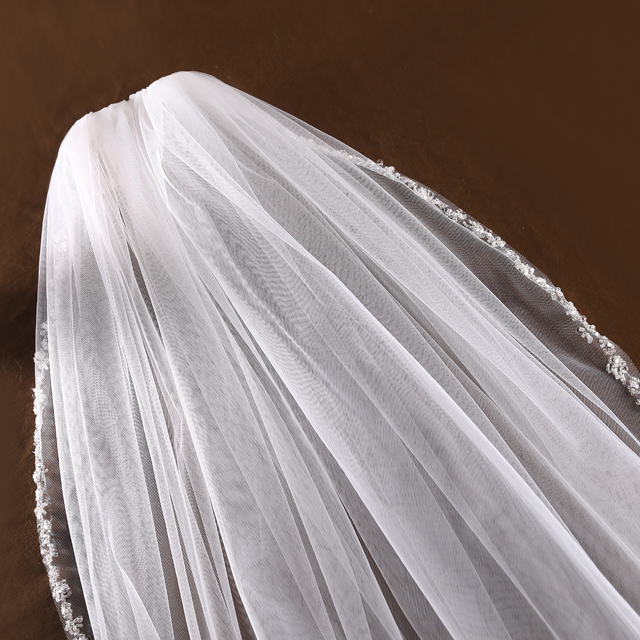
Standard nylon tulle remains the most popular choice globally. It holds its shape well. It creates beautiful volume and is highly durable against accidental pulls. If you want a bit of "pouf" at the crown of your head, nylon is your best friend.
Conversely, silk or Italian tulle offers a completely different aesthetic. It lays flat against the body. It feels almost liquid-like and offers zero volume. This makes it the best choice for sleek silhouettes and minimalist designs. However, silk is highly delicate. It snags easily on embellished dresses or rough surfaces.
Color matching creates a massive hurdle for many brides. Industry naming standards remain notoriously inconsistent. You might buy a dress labeled "ivory" and an accessory labeled "ivory," only to find they completely clash. An off-the-rack "white" synthetic fabric often contains optical brighteners. These brighteners reflect a neon blue tint when viewed next to a warm ivory dress in natural light.
You cannot trust screen pixels to judge fabric color. When shortlisting options, prioritize a reputable Bridal Veil manufacturer or atelier providing physical fabric swatches. Order several shades of white and ivory. Once they arrive, hold these swatches against your dress in broad daylight. Comparing them under natural sunlight is the only verifiable way to ensure perfect color synchronization. Indoor boutique lighting often masks subtle color differences.
Finding a beautiful Bridal Veil completes the aesthetic journey. However, you must now consider the physical reality of wearing it for hours.
Heavy, multi-tiered designs require a solid architectural foundation on your head. Loose beach waves cannot support heavy lace edges. You need a tight chignon or bun to serve as an anchor. The comb should be inserted exactly above the updo. This utilizes the tightly gathered hair as a physical shelf. It fights against gravity, stopping the comb from sliding down the back of your head.
Brides rarely anticipate the comfort degradation curve. For the first hour, everything feels fine. However, heavy combs and pulling fabrics often cause significant scalp pain after two to three hours. A cathedral length pulls backward every time it drags across a carpet. Factor this physical toll into your timeline. Plan precisely when you will take it off.
You might want massive cathedral drama for your ceremony but fear reception friction. The "Double Veil" strategy solves this dilemma. Purchase a long, dramatic statement piece strictly for the ceremony and photos. Then, seamlessly swap to a lightweight fingertip alternative for the reception. Many brides simply remove the headpiece entirely before the first dance to avoid trampling risks. This strategy guarantees stunning photographs without sacrificing your ability to dance comfortably.
Choosing the right piece requires a systematic approach. You must identify your dress silhouette first to understand the baseline geometry. Next, match your neckline geometry to ensure the fabric frames your face beautifully. Determine the overall length based on your venue and environmental constraints. Finally, verify the exact color by testing physical swatches in natural daylight.
Do not wait until the final fitting to start this process. Order physical fabric swatches now. Once they arrive, book your hair trial to ensure your selected weight is structurally supported by your desired hairstyle. Proper planning guarantees a flawless, comfortable, and breathtaking walk down the aisle.
A: Most brides spend between $300 and $500 for a quality piece. Basic nylon styles cost less, while intricate custom lace, pure silk fabrics, or extensive hand-beading push prices higher. Sourcing directly from a manufacturer rather than a retail boutique can often reduce the final price significantly without sacrificing quality.
A: Wearing a long style all day introduces severe practical limitations. Dancing and moving through crowded reception spaces become difficult. Guests will likely step on the trailing fabric, causing sudden scalp pain. We highly recommend utilizing bustles, removing it entirely after photos, or switching to a shorter fingertip alternative for the reception.
A: Exact lace matching is nearly impossible unless custom-made directly by your dress designer. Different factories use varying lace patterns. Instead of seeking an identical match, recommend complementary textures. A plain, sheer tulle style serves as a safer, highly elegant alternative. It lets your gown's intricate details take center stage.